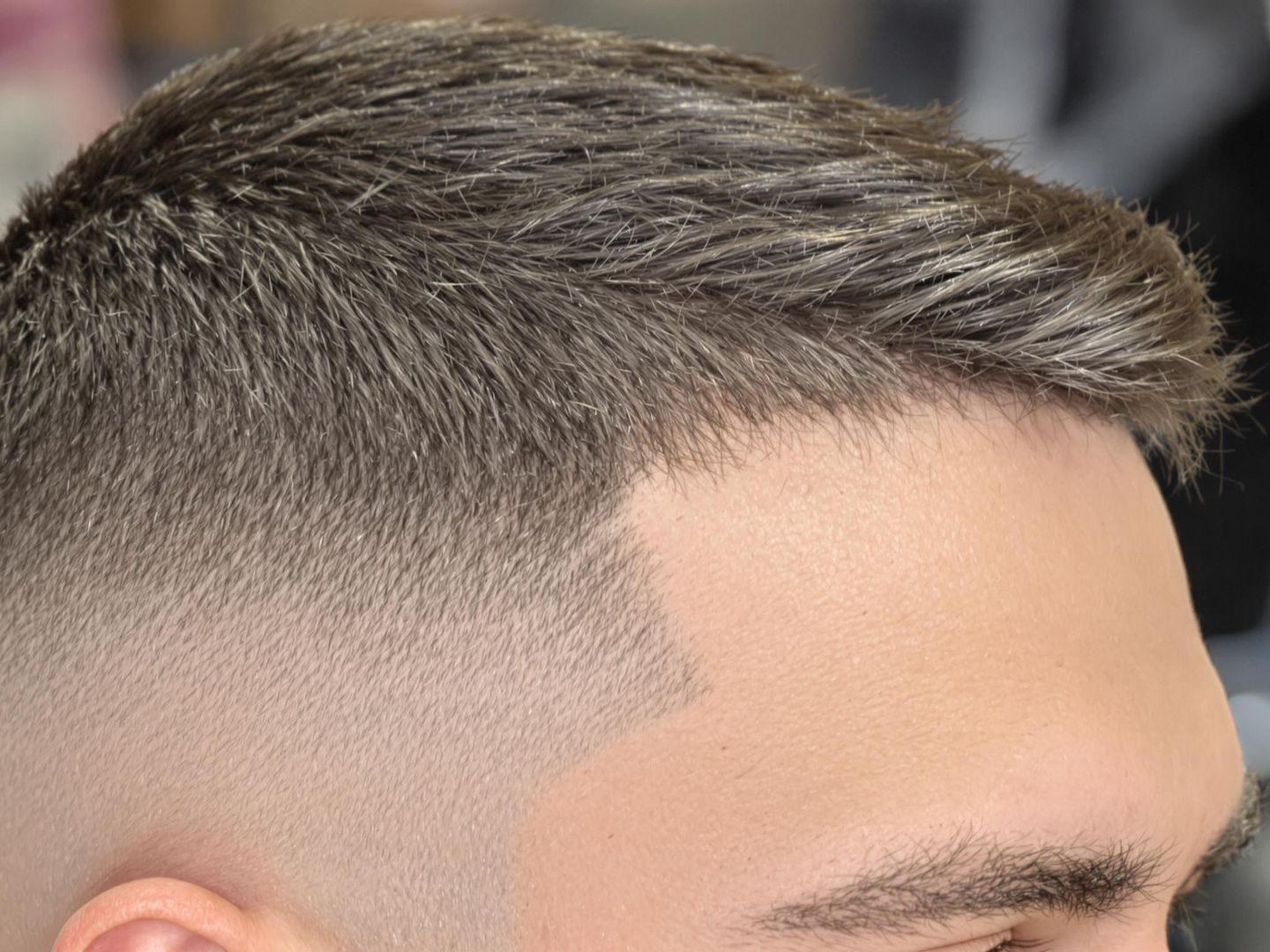
A low taper fade has moved from being a safe default to a cut people notice again, largely because it photographs cleanly and wears well between appointments. In barbershops, locker rooms, and office corridors, the look keeps reappearing with small tweaks—tight at the edges, controlled at the nape, and flexible on top.
At its core, the cut’s renewed attention comes from how it manages contrast without reading as extreme, which suits a moment when grooming signals are being read quickly and often from a distance. A low taper fade starts just above the ear and around the neckline, blending from longer hair into shorter lengths in a subtle gradient. The low taper fade style guide is less about chasing a single template and more about understanding where the taper sits, how the edges are finished, and what the top is saying. That’s where the variations live. The low taper fade style guide also reflects something practical: a cut that can look intentional on day two and still serviceable on day sixteen.
Why it’s being worn now
A look that reads “finished”
The low taper fade doesn’t announce itself in the first second. That’s part of its current value. In candid photos and quick interactions, the cut tends to register as deliberate grooming rather than an overt style statement, which makes it adaptable to different settings without changing the person wearing it.
There’s also a structural reason it reads “finished.” Most of the visual cleanup happens at the perimeter—sideburns, around the ear, and the nape—so the eye gets a clean outline even when the top is grown out. That perimeter work is what keeps the silhouette tidy.
For some wearers, the appeal is almost defensive. It offers order without forcing a drastic reduction in length. The low taper fade style guide, in practice, becomes a way to control the frame while leaving options open above it.
A compromise between strict and casual
Some cuts demand allegiance. This one doesn’t. A low taper fade can sit under a textured top and still look casual, or pair with a brushed-back finish and look formal enough for a conservative room. That middle position is why it keeps showing up across different age groups and dress codes.
Barbers often talk about cuts that “grow out honest.” The low taper fade belongs in that category because the taper is concentrated low, so there’s less exposed contrast to become messy quickly. What changes with time is subtle: the outline softens, then the sides lose sharpness, then the nape starts to blur.
In that timeline, the wearer can decide when the cut stops matching their standards rather than when it becomes obviously outdated. The low taper fade style guide is really a calendar disguised as a haircut.
The role of photo culture
A low taper fade is built for modern cameras: clean edges, controlled shadow, no harsh line that reads like a mistake when lighting turns flat. In group shots, it also avoids the “helmet” effect that can happen when sides are left bulky and the top is styled high.
That matters because more people are seen in casual images than in formal portraits now. A style that survives overhead lighting, phone flash, and unplanned angles has an advantage. The cut’s geometry helps: it keeps the head shape readable while reducing stray volume at the margins.
The trend is not only about vanity. It’s about predictability. The cut behaves the same way in a meeting, at a dinner table, or in the background of someone else’s photo. That reliability is part of why the low taper fade style guide keeps circulating.
Barbershops pushing precision
A quiet shift has happened in many shops: more emphasis on finishing work. Even when clients request “nothing crazy,” they expect the edgework to look crisp and the transitions to look intentional. The low taper fade rewards that precision, because small errors show up at the ear line and neckline.
This is also where the cut becomes a craft marker. A careful taper can look effortless, but it isn’t. It relies on clean blending, disciplined symmetry, and a sense of when not to keep chasing “perfect.” Overworking the fade can leave it looking thin or overexposed.
The low taper fade style guide, from the chair, is partly about reading the barber’s approach. Some will build softness into it from the start. Others cut it sharp and let time soften it naturally.
A style that travels well
In cities where grooming norms differ block by block, a low taper fade works as a neutral passport. It can sit comfortably in a corporate environment, a creative studio, or a night venue without feeling mismatched. That’s not true of every fade or every taper.
Travel also changes people’s maintenance habits. When schedules are uneven, a cut that tolerates delayed touch-ups becomes attractive. The low taper fade holds its shape longer than more dramatic fades because it doesn’t rely on exposed skin or a hard visual break.
Even within the same person’s routine, seasons matter. Cold weather hides the neckline, summer exposes it. The cut’s flexibility across those shifts keeps it relevant, even when other styles rotate out.
The cut’s mechanics
Placement is the whole story
The defining feature is not just that it’s a taper or a fade. It’s where the work begins and where it ends. A low placement keeps the transition close to the natural hairline, which makes the cut read as conservative even when the top is styled boldly.
Move that placement up and the tone changes fast. The eye interprets higher contrast as louder, more deliberate fashion. With the low taper fade, the message stays quieter because the change in length stays near the edges.
This is why clients sometimes think they’re asking for the same thing but receive different results. The vocabulary is slippery. The low taper fade style guide is, in many shops, a conversation about placement more than about length numbers. The mirror tells the truth.
The ear area: where it fails first
Around the ear, a low taper fade can look immaculate or strangely unfinished. The curve of the ear forces the blend to make a decision: follow the contour, or fight it. A good taper respects that curve without creating a visible shelf above it.
Small inconsistencies show up here before they show up anywhere else. One side can look tighter, the other heavier. In a balanced cut, the ear area looks clean but not scooped out, and the weight transitions smoothly into the temple.
Some barbers intentionally keep a hint of density near the ear to avoid exposing scalp unevenly. That choice can read more “natural,” especially on thinner hair. It’s a reminder that the low taper fade style guide is not a single aesthetic—it’s a set of trade-offs.
The nape tells on the schedule
The neckline is where time becomes visible. A low taper fade may look nearly identical to a fresh cut for several days, but the nape starts to reveal growth, especially on darker hair. That’s not a flaw; it’s the part that moves.
Neckline finishing also carries cultural signals. A natural taper at the nape reads softer. A sharply cleaned edge reads stricter and more deliberate. Both can be done within the same overall haircut, which is why two low tapers can feel like different categories.
Heat and friction matter here. Collars, scarves, and gym wear rub the area and can rough up the outline. The low taper fade style guide often comes down to whether the wearer values a soft grow-out or a sharp line that demands upkeep.
Sideburns and temple work
Sideburns are a small detail with oversized impact. They set the cut’s seriousness. Keep them slightly fuller and the haircut looks classic. Thin them aggressively and the look turns modern, sometimes severe, depending on face shape and hair density.
Temple work is equally sensitive. A clean temple can sharpen cheekbones in photos. It can also make the head look narrower if it’s cut too tight. The taper’s job is to balance those effects, not amplify them accidentally.
This is where communication matters. Some clients want the hairline kept natural, others want it engineered. The low taper fade style guide can’t ignore that the same technical move reads differently on different faces.
Blending versus “erasing”
Blending is not the same as erasing. A low taper fade can be blended so tightly that it looks airbrushed, but that level of perfection can backfire if the scalp shows through in patches or if the hair grows in unevenly. Sometimes leaving a little softness is the more sophisticated choice.
There’s also the problem of chasing symmetry. Heads aren’t symmetrical. Hairlines aren’t symmetrical. Overcorrecting can make the cut look forced. The best low tapers accept a small amount of natural variation while still looking controlled.
This is why the low taper fade style guide often sounds contradictory in the shop. “Clean, but not too clean.” It’s not evasive language. It’s the reality of trying to make hair look natural and intentional at the same time.
Variations that change the message
With a textured top
A textured top paired with a low taper fade puts attention where it’s easiest to control: up top, in the visible light. The sides stay quiet, acting as a frame rather than a competing style element. The result can look casual without looking careless.
Texture also hides minor day-to-day changes. When the top is meant to be imperfect—piecey, separated, slightly chaotic—it doesn’t demand the same level of daily precision. That pairs well with a low taper that’s designed to grow out without shouting.
In practice, the variation depends on the amount of weight left at the temples. Too much and the textured top can look disconnected. Too little and the head can look pinched. The low taper fade style guide, here, becomes a study in proportion, not trend.
With curls or coils
Curls change everything because they change how length behaves. A low taper fade under curls can look neat while allowing the top to remain expressive, which is often the point. The taper controls the perimeter so the curl mass doesn’t spill outward.
Shrinkage complicates the visual balance. A top that looks moderate in the shop can look shorter later, while the tapered sides keep their silhouette. That can make the head look taller or narrower depending on how the curl sits. Moisture and product choices affect the shape day to day.
Another factor is the hairline. Aggressive linework can look sharp, but it can also appear unnatural against a soft curl pattern. The low taper fade style guide in curly hair often prioritizes an honest hairline and a controlled nape over extreme sharpness.
With a buzz or very short top
When the top is short, the taper becomes the headline. A low taper fade paired with a buzz creates a disciplined, almost uniform look, but the low placement keeps it from reading like a high-contrast statement cut. It’s minimal, not blank.
The risk is making the sides too clean while the top is too flat, which can emphasize scalp visibility. Small differences in hair density become obvious when everything is short. Some wearers prefer leaving slightly more length at the sides to keep the head shape from looking stark.
This variation is also honest about maintenance. If the top is clipped regularly, the taper can be refreshed at the same time. The low taper fade style guide here is about consistency—repeating the same clean outline instead of reinventing the style.
With a side part or combed finish
A combed finish changes how the taper reads. The top looks structured, so the sides must look deliberate too, even if the taper itself is subtle. This is where a low taper fade can feel quietly formal, especially when the part is clean and the silhouette is controlled.
But it can also look dated if the contrast is too polite and the top is too stiff. The line between classic and costume is thin. Barbers often adjust by leaving a bit of natural movement on top while keeping the perimeter neat.
The low placement helps. It keeps the style from looking like a reenactment of an older era. In a low taper fade style guide, this variation is often the proof point that subtlety can still read modern when the finishing is current.
With fringe or forward styling
Forward styling—fringe, crop, or any top that leans toward the forehead—pushes the haircut into a different mood. The face becomes the focus. A low taper fade supports that by cleaning the sides without pulling attention away from the front.
This variation has practical issues. Fringe shows oil and separation quickly. It also makes the top-to-sides transition more noticeable because the top is visually heavy. If the taper is too low and too soft, the cut can look bottom-heavy. If the taper is too tight, it can make the fringe feel like a separate piece.
Here, the low taper fade style guide is essentially about balancing two directions at once: hair moving forward on top, hair moving down at the edges. When it works, it looks intentional without looking overbuilt.
Maintenance and public expectations
The upkeep is modest, not zero
A low taper fade is often sold as easy, but “easy” has limits. The first thing to go is the outline—around the ear and at the nape. Once that softens, the haircut can still look fine, but it stops looking freshly chosen and starts looking merely grown.
Some people accept that shift. Others don’t. The difference is not vanity; it’s preference and context. A person who needs to look sharply groomed for work may treat a two-week taper as expired. Someone else may ride it a month without concern.
Weather and routine play roles. Sweat, hats, and frequent washing affect how the top sits, which in turn changes how the taper is perceived. The low taper fade style guide, for many wearers, becomes a way to set expectations before the cut is even done.
Barber-client language can misfire
Miscommunication is common because “low,” “taper,” and “fade” mean different things to different people. Some clients say “taper” but imagine a fade to skin. Some say “fade” but want something that never exposes scalp. The haircut they receive reflects the barber’s interpretation.
Photos help, but even photos can mislead. Lighting, hair density, and head shape change the look. Two identical cuts can read differently on different people, and a single photo doesn’t show how it grows out.
This is where precision matters more than enthusiasm. A calm discussion about ear area, sideburn width, and neckline finish prevents disappointment. A low taper fade style guide is not just technical; it’s a shared vocabulary built in the first five minutes.
Skin, scalp, and the limits of “sharp”
There’s a point where chasing sharpness becomes counterproductive. Very tight tapering can irritate sensitive skin, especially at the nape where friction is constant. Some people also experience visible redness or bumps after aggressive clipper work, which changes how “clean” the cut actually looks.
Scalp visibility is another factor. On thinner hair, a tight taper can look like loss rather than style, even if the hair is healthy. A softer taper can protect the look by preserving density at the edge.
This isn’t a moral argument for “natural.” It’s a practical one. The low taper fade style guide has to include the wearer’s skin and hair realities, not just the ideal picture of a fresh cut under perfect lighting.
The edge-up question
Some versions of the low taper fade are defined by an edge-up, others avoid it entirely. A sharp edge-up can make the haircut look more deliberate and more finished in photos. It can also make the grow-out look abrupt as soon as hair returns at the line.
A softer, natural hairline tends to age better over a few weeks. But it may not satisfy someone who wants immediate crispness. There’s no universal answer, only a trade between a strong first impression and a smoother timeline.
This is also where public perception gets involved. People read hairlines as signals—of grooming, of style, of identity. A low taper fade style guide that ignores the edge-up debate misses how much of the haircut’s meaning is carried by a few millimeters of line.
When the cut stops being “low”
As the taper rises—whether by design or by repeated touch-ups that creep upward—the haircut can quietly change categories. What began as low can become mid without anyone naming the shift. The wearer may only notice when the sides start looking too exposed or the head shape feels different.
This drift happens for understandable reasons. Some barbers clean higher to chase uniformity. Some clients request “a little tighter” each time. Over months, the cumulative effect is real.
That’s why maintenance is not only about frequency. It’s about preserving the original placement. In the low taper fade style guide, the final variation is time itself: the way repeated decisions reshape the cut until it becomes something else, with no clear moment when it changed.
A low taper fade sits at a useful intersection: tidy enough to satisfy demands for polish, flexible enough to accommodate different tops, and subtle enough to avoid becoming a costume. But it also exposes how much modern grooming is a negotiation—between what looks sharp today and what still looks acceptable two weeks from now, between an ideal outline and a hairline that isn’t perfectly symmetrical, between a barber’s instinct and a client’s mental picture. Public images can keep the style in circulation, yet the public record doesn’t settle the arguments that matter most in the chair: how low is low, how clean is too clean, and whether “natural” is a look or simply an absence of intervention. The cut will keep evolving because those questions don’t resolve. The next version will likely look familiar at a glance and different on inspection, which is how this style tends to move—quietly, and without announcing that it has changed.