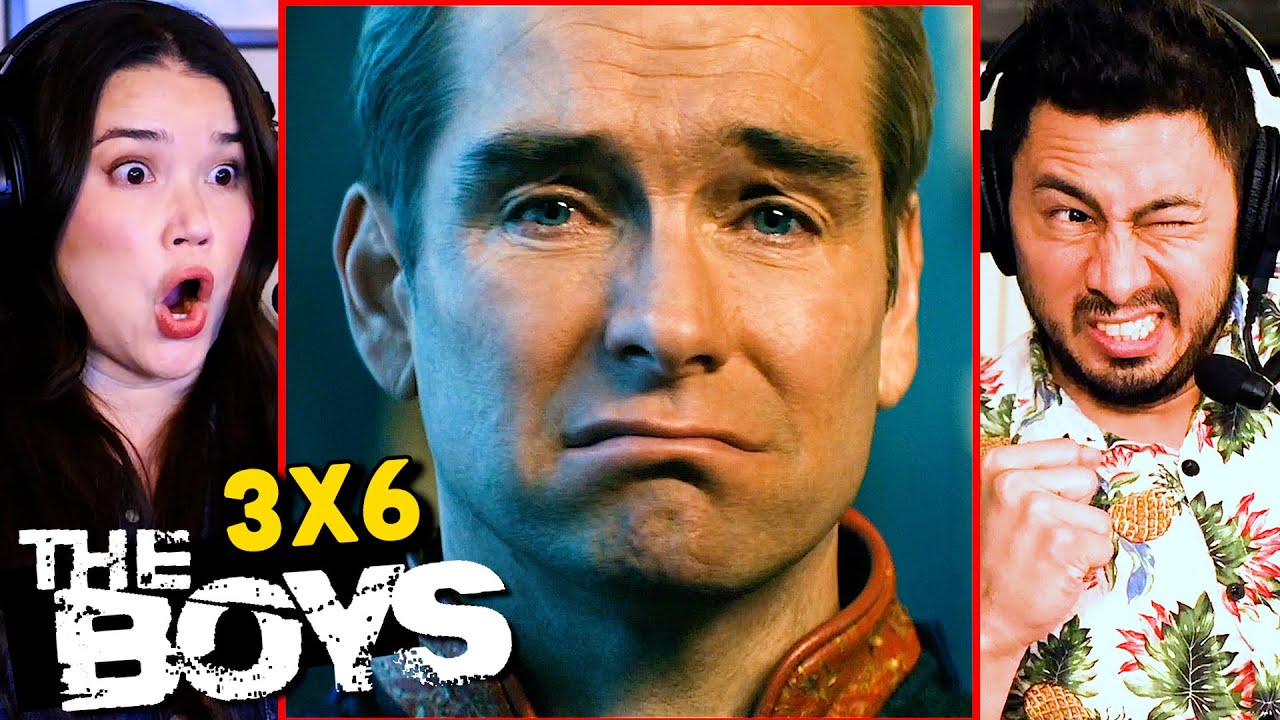
Fresh discussion around the Herogasm episode controversy has been driven less by new footage than by how the episode’s reputation keeps getting re-litigated whenever the show’s creative team revisits what it pulled off—and what it chose not to show. The sixth episode of The Boys Season 3, titled “Herogasm,” arrived with a pre-built headline: a notorious comic storyline, a streaming platform with fewer time-slot limits, and months of expectation-setting that made the reaction cycle almost unavoidable.
What’s remained striking is how quickly the debate stopped being only about explicit imagery. Some viewers still frame the Herogasm episode controversy as a test of taste and boundaries, while others treat it as an argument about marketing, craft, and whether shock is doing narrative work or simply taking up screen time. The fact that cast and creator interviews continue to surface—sometimes focused on logistics, sometimes on standards, sometimes on an offhand detail—keeps the episode in rotation as a reference point, not just a plot beat.
How the episode became a flashpoint
A title that carried its own baggage
Before the episode even played, the word “Herogasm” did much of the work. It arrived as a promise of escalation, even for a series already built on provocation, and that promise shaped early interpretations of what counted as “enough.”
The Herogasm episode controversy partly stems from how the title operates like a dare. Once audiences feel dared, they start watching for the line, not the scene. The result is that minor choices—where the camera sits, how long a shot holds, what gets pushed to background action—take on outsized importance.
That dynamic can harden quickly. People who felt warned may still feel ambushed, and people who felt sold an extreme hour may decide they were oversold.
Timing, release, and expectation pressure
“Herogasm” was released on June 24, 2022, on Prime Video. It didn’t drop into a quiet week of television, either; it arrived as an “event episode” with a known premise and a built-in curiosity factor.
That context matters to the Herogasm episode controversy because the reaction was primed to become comparative. Viewers weren’t only weighing what they saw; they were weighing it against a mental version of the episode they expected to see.
Even the episode’s length, pacing, and structure ended up part of the argument. Some treated any detour away from the party as evasive. Others read the same detours as restraint, or as proof the episode was never meant to be one-note spectacle.
Comic roots versus series translation
The source material has long been described as outrageous, but translation changes stakes. In the comic, “Herogasm” is positioned as an annual event with its own internal cover story, while the show reworks the setting and uses it as a collision point for multiple storylines.
That adaptation gap fuels the Herogasm episode controversy because it splits the audience into at least two groups: those judging it as an adaptation milestone and those judging it as a single episode of television. The same choice can look like smart compression to one group and like dilution to the other.
It also changes what “controversial” means. For some, the controversy is that the show went there at all. For others, it’s that the show didn’t go far enough to justify the build-up.
When marketing becomes part of the text
The episode’s reception is inseparable from how it was framed in advance. Once a show signals “this is the one,” audiences scrutinize the gaps as much as the content, and those gaps quickly become narrative in their own right.
That’s why the Herogasm episode controversy often reads like an argument about contracts with the viewer—spoken and unspoken. If the promise was “wildest hour,” then the question becomes whether wildness means explicitness, or chaos, or story consequence.
It’s also where discourse gets messy. People who enjoyed the episode may still resent the pre-release framing. People who disliked it may feel validated by the same framing. Either way, marketing stops being background noise and becomes evidence.
The scene that replaced the scene
A notable part of the episode’s legacy is that many conversations pivot away from the orgy material to the superhero fight that detonates inside it. Business Insider’s recap of the production talk points to the way “Herogasm” becomes a “battlefield” when key characters collide.
That pivot intensifies the Herogasm episode controversy because it muddles the episode’s identity. Viewers who came for transgression suddenly found themselves evaluating choreography, stakes, and character choices. Viewers who came for plot acceleration found themselves having to account for explicit background business that’s hard to ignore.
In practical terms, the episode created two different memories at once. One is the party. The other is the confrontation that hijacks it.
What viewers actually saw on screen
Standards, rules, and what was “allowed”
Showrunner Eric Kripke has described the episode as “probably one of the more graphic hours of mainstream television,” adding that it would take “porn” to find more graphic material. In the same discussion, he also talked about the production navigating “rules” around simulated sex, erections, and how long certain body parts can be shown.
Those remarks sit near the center of the Herogasm episode controversy because they suggest a deliberate negotiation rather than a free-for-all. The episode’s explicitness wasn’t only a creative impulse; it was also a compliance exercise, bounded by standards that still exist even on streaming.
That framing can soften or sharpen reaction depending on the viewer. Some read “we stayed within the rules” as an admission of calculation. Others read it as a reminder that the episode could have been even more extreme.
Content warning as an editorial signal
A separate strand of attention has focused on how the episode presents itself, including talk of an unusually extensive warning card at the start in some coverage. Whether viewers interpret that as responsibility or as provocation depends on how they read the show’s tone overall.
In the Herogasm episode controversy, warnings are not neutral. They become part of the staging. A warning can feel like a courtesy, but it can also feel like a drumroll.
That matters because the episode relies heavily on contrast: grotesque visuals playing behind serious conversations, comedy beats landing next to violent turns. When a warning primes viewers for one kind of experience, the episode’s tonal switches can register as clever or as manipulative.
The background action problem
One reason “Herogasm” stays contentious is that much of the explicit material is not the “main action” of scenes. It’s often background business—visible, sometimes unavoidable, but not always central to the plot beat that the dialogue is serving.
That choice shaped the Herogasm episode controversy in two opposite ways. For some viewers, background explicitness feels more intrusive because it can’t be “opted out of” without missing the scene. For other viewers, the background approach reads as a way to avoid glamorizing the orgy while still depicting it as chaotic, vulgar, and off-putting.
The technique also changes what people argue about. Instead of debating a single explicit centerpiece, they debate accumulation—how many seconds, how many cuts, how many glimpses.
Comedy, disgust, and the line of intent
The show often plays explicit material for discomfort-laughs, and “Herogasm” leans into that with a bluntness that isn’t interested in elegance. This is where reaction diverges sharply: a gag that reads as satirical to one person reads as juvenile to another.
The Herogasm episode controversy becomes harder to resolve because intent is hard to prove. A viewer can concede the show is mocking superhero celebrity culture and still think the joke choices are lazy. Another viewer can dislike the visuals but respect the consistency of the show’s worldview.
And comedy ages differently. What felt transgressive in 2022 can look like a standard “how far can streaming go” playbook later on, which makes the episode vulnerable to reappraisal.
A creator cameo that kept it alive
TVLine reported that Kripke voiced an off-screen character during the party scene, identifying it as his “first and so far only cameo” on the show. The detail is small, but it’s the kind that travels—especially when the episode is already treated like a cultural artifact.
Small details matter in the Herogasm episode controversy because they signal ownership. A cameo reads like the showrunner leaning into the moment rather than distancing himself from it. For critics, that can reinforce the idea that the episode is courting outrage. For defenders, it plays as a creator participating in the show’s long-running irreverence.
Either way, the episode’s afterlife thrives on these secondary facts. The discourse doesn’t need new scenes; it needs new angles.
Viewer reactions and the split response
“Too far” versus “not far enough”
Reaction to “Herogasm” quickly polarized, and not along a simple explicit/not-explicit axis. GamesRadar collected viewer responses that ranged from people saying they “can’t unsee” it to others arguing it “wasn’t as NSFW” as the marketing suggested.
That split is a key reason the Herogasm episode controversy never really settles. If one group is upset that the episode exists and another is disappointed it wasn’t more explicit, there’s no shared standard for what the episode “should” have been.
The disagreement also shows how modern viewers process taboo content. People aren’t only reacting emotionally; they’re rating the work on a sliding scale of extremity they’ve learned from years of boundary-pushing TV.
The fight scene became the counterargument
Even among viewers who found the orgy setting unpleasant, the action centerpiece gave defenders a quick rebuttal: the episode is remembered for narrative payoff. GamesRadar’s roundup highlights praise for the fight and for plot progression, even from viewers who downplayed the shock factor.
In the Herogasm episode controversy, the fight functions like an alibi. It allows fans to argue the episode is not just spectacle, because the spectacle gets interrupted by something structural and consequential.
That doesn’t persuade everyone. Some critics treat the fight as a distraction designed to make the explicit material more palatable. But the very existence of that argument shows how the episode’s meaning is unstable: it can be described as indulgent or disciplined depending on which sequence someone treats as the “real” episode.
Social media quotes as a distorted mirror
Viewer reactions circulated widely in the form of short posts, clipped reactions, and quote graphics. GamesRadar’s piece exemplifies that style of reaction aggregation, presenting sharply worded responses that skew toward extremes.
This matters because the Herogasm episode controversy often gets discussed through secondhand framing. People encounter reactions before they encounter the episode, or they revisit reactions later and map them onto a memory of viewing.
Short-form commentary also flattens nuance. A person can be impressed by the production and still find the content grim. But the posts that travel tend to pick a side: disgusted, delighted, disappointed, or impressed. That encourages pile-ons, then counter-pile-ons, then fatigue.
Fandom spaces debated “hype versus reality”
In discussion threads, viewers argued not only about content but about expectations, often using the language of “tame” versus “wild.” Reddit episode discussions captured both praise and pushback, with some commenters calling it an instant-classic and others disputing claims that it was “tame.”
Those arguments feed the Herogasm episode controversy by turning viewing into a status contest: who was shocked, who wasn’t, who is pretending, who is prudish, who is desensitized. The episode becomes a way to perform identity as much as to review television.
It also locks people into positions that are hard to revise. If someone publicly announced it was “nothing,” it becomes harder to later admit a scene bothered them. If someone announced it was unbearable, it becomes harder to later praise the craft.
Discomfort isn’t evenly distributed
One under-discussed aspect is how different viewers react to different elements. Nudity alone isn’t the trigger for everyone; for some, it’s bodily fluids, humiliation, or the sense that consent is being treated as a punchline. Others are less bothered by visuals and more bothered by tonal whiplash.
This is where the Herogasm episode controversy becomes less about a single moral line and more about a series of personal thresholds. Two viewers can watch the same minute and come away with different “worst” moments.
That unevenness complicates any attempt to declare what the audience thought. The most accurate record is not one verdict but a messy spread—laughter, disgust, admiration, boredom, and the occasional decision to fast-forward.
Production realities and the longer afterlife
Filming logistics became part of the story
Behind-the-scenes reporting has emphasized how difficult the episode was to stage. Kripke told Business Insider that shooting it during the pandemic was “a nightmare,” citing “dozens of naked performers and simulated sex scenes,” along with the presence of “intimacy coordinators” and “COVID officers.”
Those details reshape the Herogasm episode controversy because they pull attention away from moral judgment and toward labor and risk management. Even critics who disliked the episode often acknowledge the logistical scale implied by that description.
It also highlights a modern reality: explicitness is not just about creative boldness, it’s about protocols. A scene can be transgressive on screen and highly regulated on set. Both things can be true, and that tension becomes part of the episode’s legacy.
The showrunner’s “not exploitative” line
In the same Business Insider interview, Kripke described writer-room conversations about walking a line—being “outrageous” but “not exploitative,” and “funny” without being “gratuitous.” That is a careful framing, and it is also an invitation for audiences to judge whether the line was actually held.
In the Herogasm episode controversy, that kind of quote doesn’t end debate; it formalizes it. Once a creator says the team worried about gratuity, critics can argue the worry wasn’t enough. Supporters can argue the worry proves intent and care.
The quote also suggests a reason the episode plays the way it does. The camera doesn’t linger in one register for too long. The episode keeps moving, sometimes abruptly, as if trying to avoid letting any single tone dominate.
Streaming boundaries and a moving target
Even when creators talk about “standards,” the public often assumes streaming means “no rules.” Kripke’s comments to TVLine about specific standards constraints—timing, simulation limits—complicate that assumption.
That matters for the Herogasm episode controversy because viewers often argue as if the show had infinite freedom. The reality appears more negotiated: pushing until stopped, then adjusting to what is permissible.
It also points to the moving target problem. What counts as boundary-pushing shifts quickly, and a show that built its brand on escalation has to keep finding new edges. That can create an arms race with the audience’s tolerance, where “shocking” becomes harder to achieve without feeling forced.
The episode’s reputation outlived its plot
Many episodes are discussed intensely and then disappear into season arcs. “Herogasm” didn’t. The title remains a shorthand for the show’s extremes, sometimes invoked even by people who haven’t watched it.
That is part of the Herogasm episode controversy: it became a symbol that can be used in broader arguments about what mainstream television is now willing to depict. Once an episode becomes a symbol, it stops being evaluated like an episode.
Symbols also attract simplification. People compress it into “the orgy episode,” which can erase character beats that fans cite as the real reason it works. Others compress it into “the one that wasn’t as bad as advertised,” which can erase what some viewers genuinely found upsetting.
What future seasons inherit from it
The practical effect of “Herogasm” is that it set a benchmark—internally for the series and externally for how audiences talk about it. Once a show produces an episode that becomes a reference point, every later “big” episode gets measured against that noise.
The Herogasm episode controversy also established a template for how the franchise communicates: tease the boundary, argue about the boundary, then pivot to craft. That cycle can be useful, but it can also narrow what people are willing to discuss.
As long as creators keep commenting on what they “got away with,” the episode remains active as a public object. That doesn’t mean consensus is coming. It means the argument has become part of the show’s long-running brand.
Conclusion
The public record leaves “Herogasm” in an unusual place: widely seen, heavily discussed, but still hard to pin down as a single kind of controversy. Some of the dispute is plainly about explicit imagery and the limits of mainstream television, especially when the showrunner himself characterizes it as unusually graphic and describes navigating content rules and standards. Another part is about expectation management—an episode framed as a landmark will always be graded more harshly, whether viewers felt repelled, entertained, or simply underwhelmed.
What can be said with confidence is that the episode’s afterlife has been sustained by more than shock: the action centerpiece, the adaptation choices, and even small behind-the-scenes anecdotes keep resurfacing as proof points for different sides. Reporting about the production has also complicated the simplest narratives, emphasizing logistics, oversight, and the controlled nature of scenes that can look uncontrolled on screen.
None of that resolves the central tension. “Herogasm” remains both a piece of television and a cultural shorthand, and those two identities are often at odds. The next time the franchise needs a reference point—for what it is, what it isn’t, or what it claims to risk—this episode is likely to be invoked again, with the same argument waiting for it.