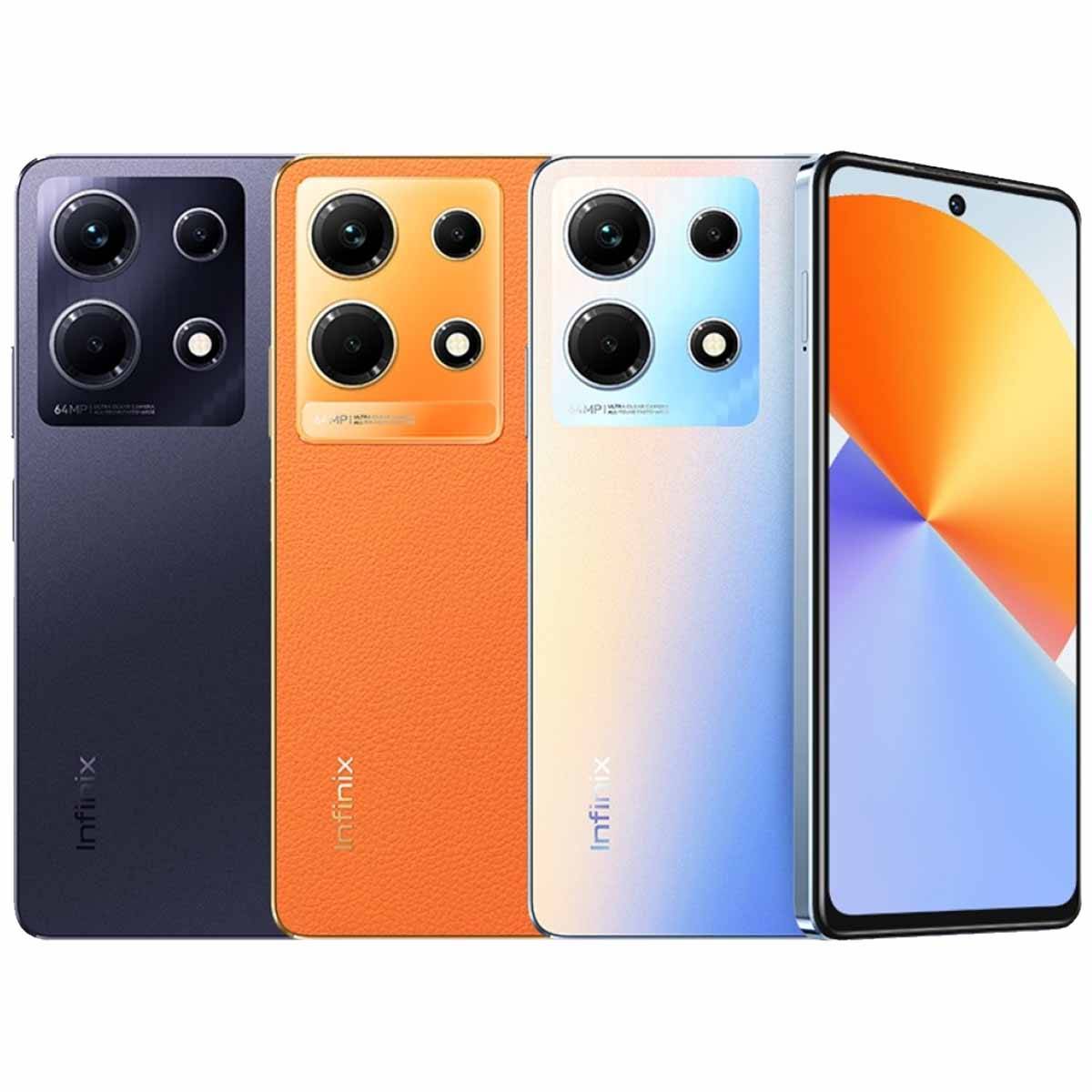
The Infinix Note 30 Price has returned to everyday conversation as retailers keep rotating fresh discounts on 2023-era midrange stock and as newer Note-line handsets reset expectations for what “budget” should include. In markets where the Note 30 is still widely available, its pricing has become less about launch positioning and more about what buyers can reasonably demand for the money right now.
That shift is visible in how listings frame the handset: not as a new arrival, but as a “still-current” option with a familiar spec sheet and a predictable ownership profile. The Infinix Note 30 Price is also being pulled into comparisons with entry 5G models, even though the standard Note 30 itself is an LTE phone, because shoppers are weighing screen quality, charging speed, and storage against network upgrades. The result is a phone that keeps showing up in shortlists—sometimes as a deliberate value pick, sometimes as a compromise that looks better once the receipt total is known.
Pricing and positioning
Pakistan retail baseline
In Pakistan, the Infinix Note 30 Price is commonly presented around Rs. 44,999 in local listings that also describe that figure as regulated by official dealers and warranty providers. That number functions more like a reference point than a single truth, because the same device can appear at different prices depending on storage tier, color, and whether stock is tied to an official warranty channel.
What matters in day-to-day buying is the gap between “headline” pricing and the final checkout. Small add-ons—delivery charges, bundle items, or store-specific warranty handling—can move the effective price even when the listing looks identical. The Infinix Note 30 Price, in other words, often reflects distribution choices as much as it reflects the handset itself.
Storage tiers and the real bill
The Infinix Note 30 is widely listed in 8GB RAM configurations paired with either 128GB or 256GB internal storage. Those tiers are not cosmetic; they shape whether the handset is treated like a basic daily driver or a heavier media device that can carry more offline video, games, and cached social content.
Pricing tends to widen between the tiers as supply thins, not necessarily because the higher tier becomes more desirable, but because fewer units remain in the channel. When that happens, the Infinix Note 30 Price can feel inconsistent across stores on the same week. Buyers often find that the “best value” tier is whichever one is being cleared fastest, not whichever one reads best on paper.
Release timing and price drift
The Infinix Note 30 was announced in May 2023 and released in the same month. That date matters because the phone now sits in a mature phase of its pricing life cycle, where the market is less sensitive to official launch pricing and more sensitive to replacement cycles and competitor promotions.
As 2026 begins, the Infinix Note 30 Price is shaped by what newer devices offer at the same checkout total, including higher refresh-rate screens or larger storage by default. The older a model gets, the more buyers expect “extras” to be baked into the price rather than added as upsells. That expectation presses down on margins in a way spec sheets alone can’t prevent.
Online listings versus shop-floor pricing
Online listings often standardize the story: one number, one phone, a clean grid of specifications. Some Pakistani listings explicitly present a single retail figure and add that daily updates occur, while also disclaiming that accuracy cannot be guaranteed. That’s not just fine print; it signals that pricing is being treated as dynamic.
Shop-floor pricing can diverge for more practical reasons—stock aging, box condition, accessory completeness, or the presence of an official warranty card. The Infinix Note 30 Price therefore behaves like a moving target even without dramatic market events. For buyers, the “market” is often not one price, but a narrow band that shifts week to week.
Where it sits in the lineup
The Infinix Note 30 is positioned as an LTE smartphone built around the Helio G99 platform and a large high-refresh display. That combination puts it in a familiar competitive bracket: phones that prioritize screen size, battery, and storage while leaning on 4G to keep costs down.
This is also why the Infinix Note 30 Price remains relevant even next to newer releases. The device is not trying to be a flagship substitute. It’s trying to be the phone that looks “complete” at a number that feels controlled—especially for buyers who value a big screen and fast charging more than the latest modem.
Core features and hardware
Display and everyday feel
The Infinix Note 30 uses a 6.78-inch IPS LCD display with a 120Hz refresh rate and a listed peak brightness around 580 nits. In practical use, that specification cluster tends to translate into smoother scrolling and a more “alive” interface than older 60Hz budget panels, even when the underlying processor is not premium.
This is also where expectations meet reality. IPS LCD can look clean and bright, but it will not mimic OLED contrast in dim scenes. Buyers weighing the Infinix Note 30 Price often treat the display as the most visible “value” feature, because it is experienced constantly—reading, short video, long video, and the endless idle screen moments between tasks.
Chipset, RAM, and the midrange ceiling
At the center is MediaTek’s Helio G99 (6 nm), paired with an octa-core CPU and Mali-G57 MC2 graphics. That setup is widely associated with stable midrange performance rather than peak performance, which matters because stability is what most owners notice over months: fewer stutters, fewer heat surprises, fewer moments where the phone feels older than it is.
Memory configurations commonly include 8GB RAM, with storage variants that reach 256GB. The Infinix Note 30 Price looks most convincing when the phone is treated as a “keep it for a while” device, because extra storage delays the moment when the handset starts feeling cramped. That delay can be worth more than small differences in benchmark headlines.
Battery and charging as a selling point
A 5000 mAh battery sits at the center of the Infinix Note 30’s day-to-day appeal. The bigger talking point is charging: the handset is listed with 45W wired charging. In this segment, charging speed changes behavior—people top up opportunistically instead of planning around long cables and long waits.
It also changes how the phone is judged against newer models. Even if competing devices offer slightly newer processors, slower charging can feel like a step backward in routine life. The Infinix Note 30 Price is often defended on that basis: not that it wins every spec comparison, but that it hits the features people repeatedly touch—battery confidence and quick recovery when the battery drops.
Build, size, and carry trade-offs
The device is listed at about 219 g with dimensions around 168.6 x 76.6 x 8.6 mm. That is not subtle in the hand, and it shapes the ownership experience more than many shoppers admit at the counter. Big-screen value usually comes with weight and footprint, and the Note 30 doesn’t pretend otherwise.
Material notes vary by market, with GSMArena describing a glass front, plastic frame, and either glass or leather back depending on version. In practical terms, this means the feel can differ from unit to unit even under the same model name. That nuance can matter in resale, where condition and “hand feel” influence what buyers are willing to pay.
Connectivity and the missing “future-proof” claim
Network support is listed as GSM/HSPA/LTE, placing the standard Infinix Note 30 clearly in the 4G lane. That matters in 2026 because the conversation around value increasingly includes network longevity, even in places where 5G is uneven. Buyers are not always chasing 5G speeds; they’re chasing the idea that their phone won’t be the first thing that feels outdated.
Other features—like NFC—are explicitly described as market or region dependent. That “depends” clause is a quiet driver of market value, because uncertainty reduces confidence in second-hand transactions. The Infinix Note 30 Price can look strong in a listing, but buyers often want to confirm the exact unit’s feature set before treating it like a deal.
Cameras, audio, and daily media
Rear camera basics and expectations
The Infinix Note 30 is listed with a 64 MP main rear camera, alongside auxiliary lenses. On paper, that sounds like a straightforward “more pixels” pitch, but the lived result usually hinges on processing—how the phone handles motion, indoor noise, and mixed lighting rather than how it performs outdoors on a clear day.
In this class, camera performance is often judged socially: how faces look in quick shots, how readable text appears in a document photo, how stable short clips feel when shared. The Infinix Note 30 Price is frequently weighed against that practical bar. If the phone clears “good enough for sharing,” buyers forgive the lack of specialty results like true optical zoom or high-end night capture.
Video capture and what it signals
Video specs are listed up to 1440p at 30fps, with 1080p options at 30/60fps. Those numbers suggest that the phone is not only aimed at still photos but also at the routine video that now defines many users’ camera rolls: quick street clips, family moments, and short social posts.
The gap between capability and consistency is where perception forms. Some buyers want the option to record at higher resolution even if they rarely do it, because it signals “headroom.” That kind of headroom affects market value: listings that mention 1440p can look more confident, even if most owners live in 1080p for storage and sharing reasons.
Selfie camera and front-facing reality
The front camera is listed at 16 MP with support for video up to 1440p at 30fps and 1080p at 30/60fps. That places it in a competitive zone for daytime selfies and standard front-camera video calls, where lighting does most of the work and sharpness is often “good enough” at normal viewing sizes.
Front-facing flash support is also noted in some spec listings, which can matter for low-light selfies even if it’s not a flattering look. In resale, selfie performance is rarely described with nuance; it’s often reduced to “clear” or “not clear.” The Note 30 tends to stay on the safer side of that binary, which helps stabilize how the Infinix Note 30 Price is defended in casual buyer conversations.
Speakers, headphone jack, and the small comforts
The handset is listed with stereo speakers and a 3.5mm headphone jack, with “Tuned by JBL” also noted. These are not glamorous line items, but they keep showing up as deciding factors because they remove friction: watching video without reaching for a Bluetooth speaker, plugging in a cheap pair of wired earphones without adapters.
In markets where phones are shared within households, loudspeaker quality can influence purchase decisions more than camera specs. The Infinix Note 30 Price can feel more justified when the phone behaves like a small media device, not just a communications slab. The presence of the headphone jack, in particular, plays well in second-hand markets where accessory costs matter.
Storage expansion and media habits
A dedicated microSDXC slot is listed for the Infinix Note 30. That detail shapes how the phone is used: more offline music, more downloaded video, more “keep everything” behavior without constantly deleting older content. It also shapes how buyers think about storage tiers, because expandable storage can reduce the urgency of paying more upfront.
Still, microSD is not a full substitute for faster internal storage for app-heavy users. The phone’s value proposition becomes clearer when it’s used the way many people actually use midrange devices: internal storage for apps and core media, microSD for overflow. That pattern has a quiet effect on market value because it helps older devices age more gracefully.
Market value and buying outlook
Depreciation without a single curve
The Infinix Note 30 was released in 2023, which places it past the steepest part of early depreciation in most electronics cycles. After that early drop, pricing tends to move in steps rather than slopes: small cuts during promotions, brief rebounds when stock tightens, then another cut when a newer wave arrives.
That stepped behavior is why “market value” feels slippery. One buyer’s reference point might be a high-visibility listing price, while another’s might be a friend’s negotiated in-store deal. The Infinix Note 30 Price can look stable in screenshots and still behave unpredictably in real transactions, especially when different storage variants circulate unevenly.
New stock versus used stock realities
New units often carry the clearer story: box condition, known accessory set, and a more straightforward warranty narrative. Some listings in Pakistan explicitly frame their price as tied to official dealers and warranty providers. Used units carry a different value logic—condition, battery health, screen wear, and the seller’s credibility all become “features” even if no one calls them that.
In this environment, market value is not only what the phone can do, but what risk it carries. A Note 30 that looks cosmetically clean can command a surprising premium compared with a cheaper unit that comes with uncertainty. That is especially true for phones with large displays, where scratches and pressure marks are immediately visible.
What features hold value best
Certain specifications tend to keep their relevance longer than others. A 120Hz display remains noticeable regardless of year, because it changes the feel of interaction. Fast charging also ages well because it solves a daily problem rather than a benchmark problem, and the Note 30’s 45W listing remains competitive in its segment.
Other features fade faster. Camera megapixels are quickly normalized by newer devices, and processor differences can feel abstract if both phones open the same apps acceptably. The market value of the Note 30 often rests on the “still feels modern” details: smooth screen, quick charging, adequate storage options.
Regional feature variability and buyer caution
When a spec sheet says a feature is region dependent—NFC is a common example—it introduces a verification step into the buying process. That verification step affects liquidity: phones that are harder to describe precisely are harder to sell quickly, and anything that slows a sale usually reduces price.
This is why some sellers lean heavily on model numbers and exact variant naming, while others keep descriptions vague. In a cautious market, vague listings push serious buyers away or invite harder negotiation. The Infinix Note 30 Price, in that context, becomes less about “what it should cost” and more about how confidently the unit can be identified.
2026 outlook for pricing pressure
As newer budget models push higher base storage and more aggressive charging specs, older devices are forced to compete on actual street price rather than reputation. The Note 30’s fundamentals—Helio G99, 6.78-inch 120Hz display, 5000 mAh battery—remain straightforward and easy to sell as a package. But the longer the model stays in circulation, the more buyers treat it as negotiable by default.
That doesn’t mean it collapses in value. It means the “fair” price becomes more sensitive to context: official warranty versus shop warranty, 128GB versus 256GB, clean condition versus visible wear. The Infinix Note 30 Price will likely continue to fluctuate inside a familiar band until stock meaningfully thins or until the market stops treating 4G-only devices as safe long-term purchases.
Conclusion
The Infinix Note 30 Price now functions less like a launch-era statement and more like a continuing negotiation between spec comfort and market timing. The public record is clear on the hardware identity: a 2023 release built around a 6.78-inch 120Hz IPS LCD screen, Helio G99, a 5000 mAh battery, and 45W wired charging. It is also clear that at least some Pakistan-facing listings place the phone around Rs. 44,999, while acknowledging that day-to-day updates and accuracy limits exist in the retail ecosystem.
What remains harder to pin down is a single “true” market value, because that value is distributed across condition, warranty handling, and variant specifics—especially when features like NFC can be region dependent. In practice, the Note 30 holds attention because its most felt features are not subtle: screen size, refresh rate, charging speed, and storage flexibility are all easy to experience in the first few minutes of use. But the same clarity creates pressure. As the budget category keeps moving, a 4G-only phone must justify itself at the counter, not in memory.
The next shift will likely come from outside the device: how quickly retailers clear remaining units, how aggressively rivals price entry 5G models, and whether buyers continue to reward “complete-feeling” LTE phones when the word “future-proof” keeps creeping into even low-cost decisions.